
A Bias Towards Action: The Courage to Begin
Why taking the first step matters more than having all the answers
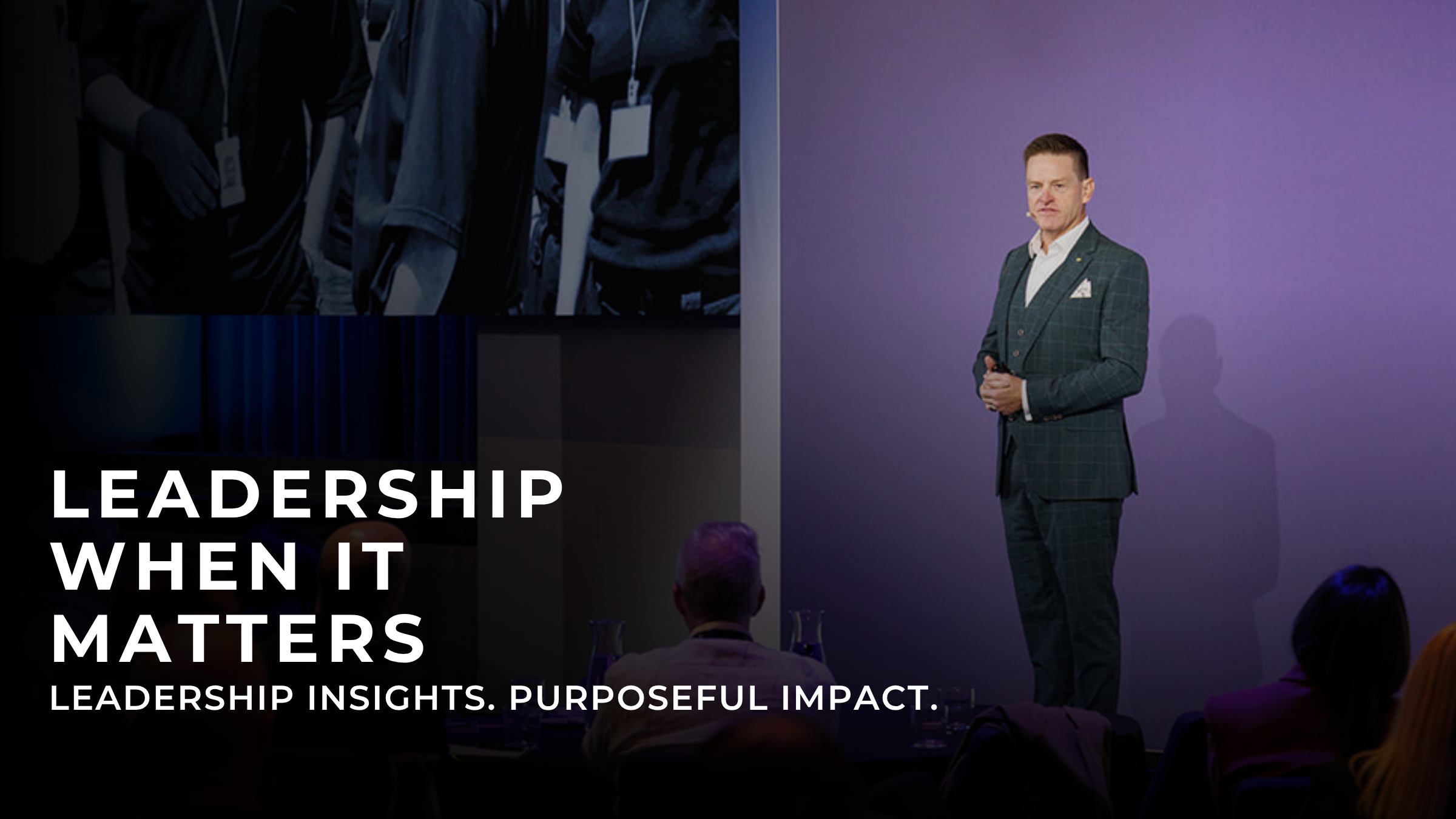
At the end of a recent keynote presentation, during question time, I was asked an interesting question:
"Where do you think your entrepreneurial spirit came from?"
It caught me by surprise because I have never really considered myself an entrepreneur.
I suspect the question came from the audience's understanding of the journey behind building Hands Across the Water and the way we have continued to evolve over the past twenty years to meet changing circumstances, new challenges and the realities of leading an international charity.
My immediate response was simple: I saw an opportunity, and even though the timing in my life was far from ideal, I started anyway.
What is a bias towards action?
On the drive to the airport after the keynote, I kept thinking about that question and realised there was a better answer than the one I had given.
Perhaps what people see as an entrepreneurial spirit is simply a bias towards action.
Not recklessness. Not blind optimism. Just a willingness to start before everything is clear.
The truth is that once Hands Across the Water began, stopping never felt like an option. It would have felt selfish to walk away. The philosophy that has guided me since those early days is straightforward: while we can, we should.
That mindset—placing results ahead of excuses—has shaped much of my life. It has influenced the way I have approached leadership, challenges and opportunities.
Looking back over two decades, the time, energy and resources invested into Hands Across the Water are now creating some of the most significant and sustained impact we have ever seen. Almost every week, I hear stories of children we once knew growing into adults, building careers, creating families and contributing to their communities.
Those moments are powerful reminders that meaningful change takes time, but it always begins with action.
Leadership, uncertainty and taking the first step
I often think about the Run 2 Remember in Thailand in 2024, when I ran 1,400 kilometres in 26 days.
Before that, my longest run had been around 60 kilometres, meaning I was attempting something more than 1,300 kilometres beyond anything I had ever done before.
There was so much uncertainty.
In fact, only recently, while leading one of our 500-kilometre corporate bike rides in Thailand, I walked out into the midday heat and sent my wife a message asking,
"How did we do that run?"
The reality is that when we begin something meaningful—whether it is building a charity, taking on an extraordinary challenge or creating something new—we rarely have all the answers.
We do not know every obstacle that lies ahead, and often we do not even know what questions we will need to ask.
But clarity comes through action.
I have learned that I do not need complete certainty before I begin.
The path reveals itself as we move forward.
A bias towards action creates meaningful change
Opportunities rarely arrive fully formed, and meaningful change seldom begins with certainty.
It begins when someone decides to take the first step.
Perhaps that is what people call entrepreneurship.
I simply think of it as having a bias towards action.
If this article resonated with you, you may also enjoy We Will Never Be This Age Again.
Frequently asked questions
-
A bias towards action is the willingness to take the first step before every detail is known. Effective leaders understand that clarity often comes through action, learning and adaptation rather than waiting for certainty. This mindset has shaped Peter Baines' leadership philosophy throughout his career in policing, humanitarian work and as a leadership keynote speaker.
-
Leaders are often required to make decisions with incomplete information. Taking thoughtful action builds momentum, encourages innovation and helps teams navigate uncertainty with confidence. Many of Peter Baines' keynote presentations explore how leaders can make confident decisions, even when the path ahead isn't fully clear.
-
Endurance challenges demonstrate that extraordinary outcomes are achieved one step at a time. Whether leading a team, building an organisation or pursuing a personal goal, resilience is developed through consistent action, adaptability and purpose.
Peter Baines explores these lessons in greater depth in his book, Together We Can, where he shares the leadership principles and real-life experiences that have shaped his approach to creating meaningful change, navigating uncertainty and leading with impact.
-
An entrepreneurial mindset is about recognising opportunities, solving problems and acting despite uncertainty. Whether building an organisation, leading a team or creating social impact, meaningful change begins when someone chooses to move forward rather than wait for perfect conditions.escription