
The Leadership Gift of Vulnerability
Leadership often carries an unspoken expectation that we should always appear strong. That we should have the answers, push through adversity and never let others see us struggle. This was the culture that I experienced working in an acknowledged high-stress, high-risk environment of my crime scene days within NSW Police. To show any weakness, physical or mental, was a direct pathway out of a job.
Last week, on our Hands 500km bike ride in Thailand, I was reminded why that belief is not only wrong—it can unintentionally hold others back.
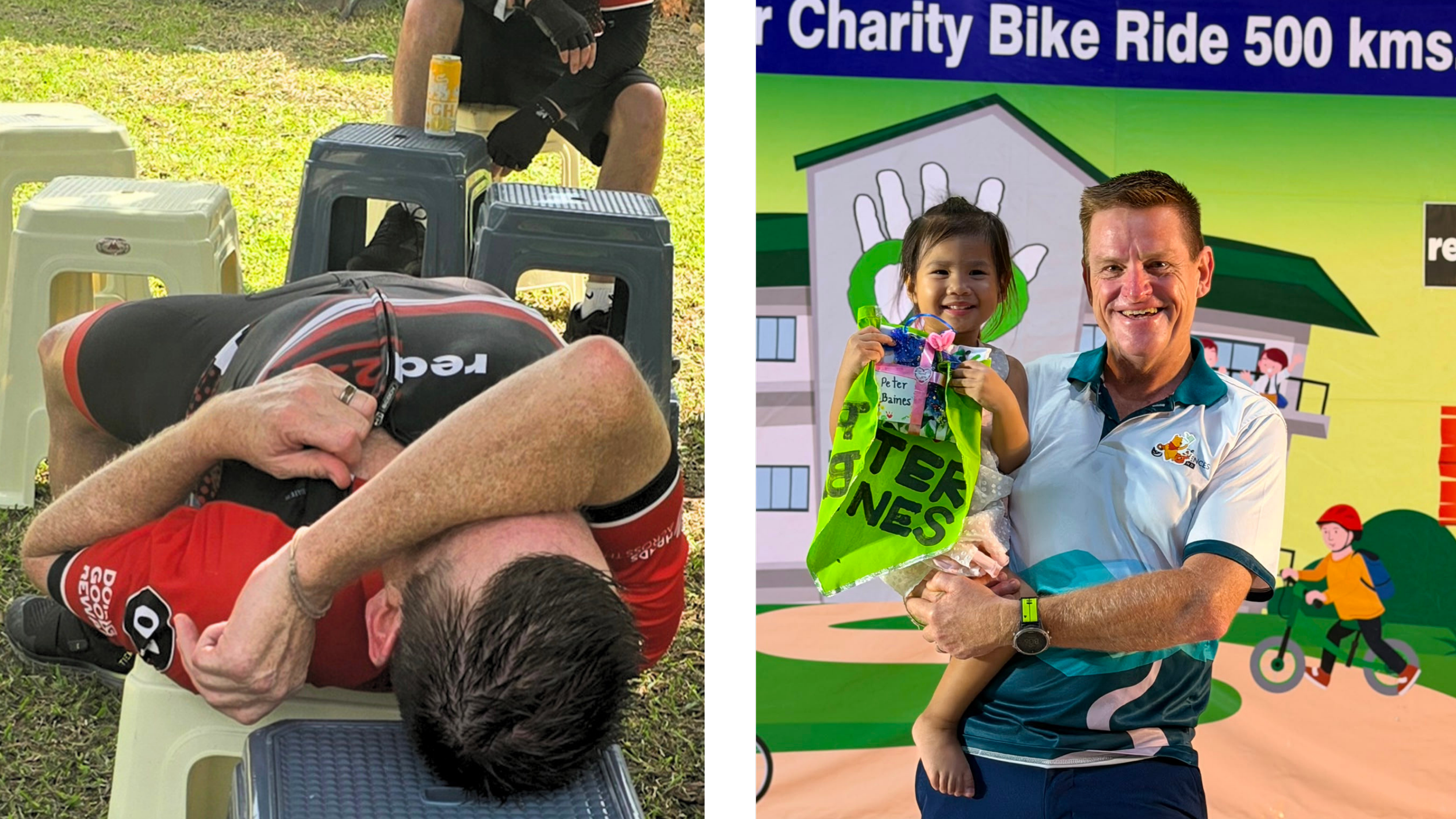
Day three was one of the toughest days I can remember on a bike in Thailand.
It wasn't the 140 kilometres I rode. It wasn't the elevation of the hills we climbed. It wasn't even the temperature that climbed well into the high 30s.
It was the relentless headwind.
Eating breakfast, I could see the flags fluttering and the movement of the branches in the tress. History told me if we had wind at breakfast, we would have headwinds all day. I didn’t share that nugget of information with the group, but I knew we would be in for a tough day of cycling.
For close to nine hours, we rode into it. Every pedal stroke felt like a battle. Every kilometre had to be earned. By the time we reached the finish I had emptied every physical and mental reserve I had. I was completely spent.
Around me, many of the riders had reached their own limits. Some climbed into the support van for a leg or two. Others questioned whether they were capable of finishing the ride at all. It was a day that tested everyone.
The real lesson, however, didn't come on the bike.
It came the following evening when I spoke over dinner.
I simply said, "I can't remember a harder day on the bike in Thailand."
The room fell silent.
For many of the riders, I represent experience. After almost fifty rides of 500 kilometres or more through Thailand, they naturally assumed that what challenged them would be routine for me.
It wasn't.
As the conversations continued, several riders shared, often emotionally, that they had felt like failures because they couldn't complete every kilometre. They believed they had let themselves down, and perhaps even let the group down.
But hearing that I had struggled too changed everything.
The weight they had been carrying suddenly lifted.
Their benchmark had shifted. If someone with decades of experience had found that day incredibly difficult, then perhaps their own struggle wasn't evidence of weakness. Perhaps it was evidence that the challenge really was extraordinary.
That reminded me that vulnerability is one of the greatest gifts a leader can offer.
“Leadership isn't about convincing others you're invincible. It's about giving them the confidence to believe they are capable.”
When leaders pretend everything is easy, people compare their internal struggles with someone else's outward confidence. The result is often self-doubt, isolation and the belief that they simply aren't good enough.

They replace comparison with connection. They create environments where people feel safe to persevere instead of feeling ashamed for struggling. As my coach for the Run to Remember, Matty Abel said to me “Comparison is the Thief of Joy”.
Vulnerability is not about lowering the standard.
It is about telling the truth.
Vulnerability didn't diminish my credibility; it strengthened the confidence of everyone around me.
People don't need leaders who never struggle. They need leaders who are prepared to admit when they do, while continuing to move forward.
Sometimes the strongest thing we can say is, "I found that hard too."
You never know whose burden that simple sentence might lift.
If your organisation is investing in stronger leaders and more connected teams, I'd welcome the opportunity to bring these conversations to your next conference, leadership event or executive gathering.
Together, we can explore how trust, vulnerability and purpose become powerful drivers of performance, resilience and lasting impact.