
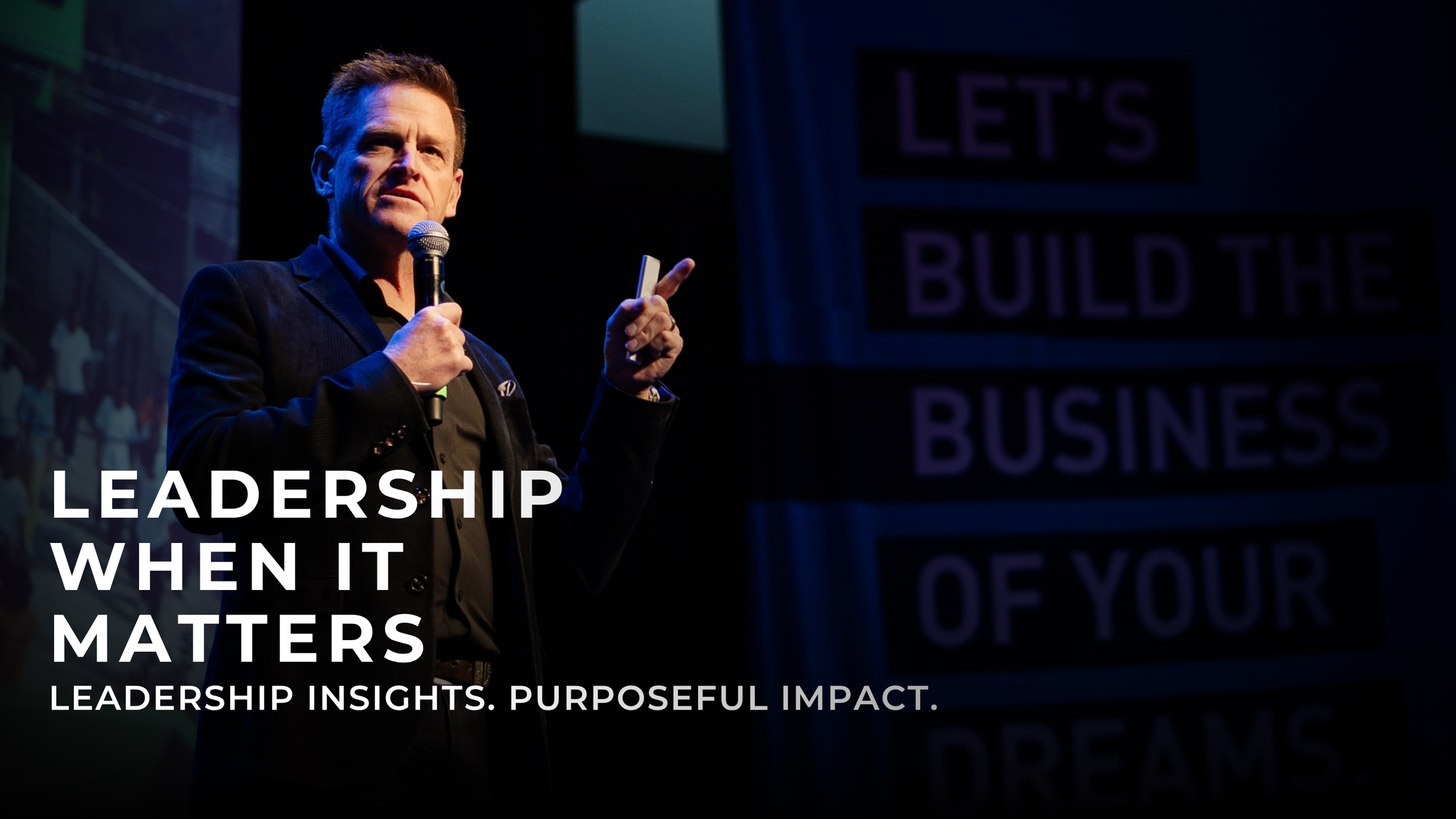
After twenty years of speaking on stages of all shapes and sizes, across Australia and around the world, I recently found myself in a situation I hadn’t experienced before.
There was no keynote.
No PowerPoint.
No carefully crafted 45-minute presentation.
Instead, I sat on a stage for an hour alongside Queensland Chief Health Officer Dr Marianne Gale, as the two of us were interviewed in front of around 800 Queensland Government employees, with many joining from across the state.
And I loved it.
The event, hosted by the Queensland Department of the Premier and Cabinet, was a conversation rather than a presentation. While I have participated in plenty of panels over the years, they have generally followed a keynote.
This time, the panel was the event.
What made it particularly interesting was that Marianne and I had been selected because, on the surface, our careers appear quite different, yet the environments in which we have worked have many similarities.
Marianne spent several years working as a clinician with Médecins Sans Frontières, including in developing countries, before returning to Australia and moving into public health leadership. She subsequently served as Deputy Chief Health Officer in NSW during the COVID years before taking up her current role in Queensland.
My own career has taken a very different path.
As a former police forensic specialist, I have worked internationally following events including the Bali bombings and the Boxing Day tsunami in Thailand. During my counter-terrorism work, while seconded to Interpol, I also worked on the threat posed by the Ebola virus. Later, I was involved in disaster response work in both Saudi Arabia and Japan.
Different professions.
Different responsibilities.
Different technical expertise.
But remarkably similar leadership challenges.
What different professions can teach us about leadership
Before we went on stage, Marianne and I spent some time talking about our experiences. It quickly became apparent that although our careers had never really intersected, there were plenty of moments we could relate to.
Her experiences treating people with tuberculosis and working to advance public health policy in developing countries had parallels with my experiences working in complex environments following disasters and acts of terrorism.
The circumstances were different.
The technical challenges were different.
But the human challenges were often the same.
And that became one of the central themes of our conversation.
Leadership doesn't change just because the environment does.
One of the most interesting parts of the discussion was around leading through change, particularly when working in culturally different environments.
There were four lessons that stood out.
1. Don't assume you have all the answers
When you step into a leadership role in an unfamiliar environment, your technical expertise can only take you so far.
It is tempting to arrive with the belief that because you have been successful somewhere else, the same approach will work here.
It often doesn't.
Your experience matters, but so does recognising what you don't know.
The ability to lead in a new environment requires more than applying what has worked before. It requires a willingness to understand the circumstances, question your assumptions and learn from the people around you.
2. Listen before you lead
The communities you are working with often understand the environment better than you do.
Their knowledge, experience and perspective can be the difference between a solution that looks good on paper and one that actually works.
Where possible, bring people into the decision-making process.
Leadership isn't always about having the answer.
Sometimes, it is about creating the conditions for the right answer to emerge.
3. Be honest and transparent
This sounds simple, but it becomes particularly important when people are operating in uncertainty.
When people don't have information, they fill the gaps themselves.
And what fills those gaps isn't always helpful.
You don't need to have all the answers to communicate honestly. Sometimes, the most powerful thing a leader can say is:
“I don't know yet, but this is what we do know, and this is what we're going to do next.”
Being transparent doesn't remove uncertainty, but it gives people something they can work with. It helps them understand where things stand, what is known and what happens next.
That matters in a crisis, but it also matters when leading a team through everyday change.
4. Be present
This is perhaps the leadership lesson I return to most often.
Presence matters.
People remember whether their leader was there when things were difficult.
Leadership isn't only about the decisions you make. It is also about whether people can see you making them.
Whether they can hear from you.
Whether they feel you are with them.
Being present doesn't mean having an immediate solution to every problem. It means remaining visible, communicating with people and standing alongside them when the outcome is uncertain.
The circumstances change. The challenges don't.
Why leadership challenges are often the same across industries
One of the best observations of the day came from our facilitator.
It doesn't necessarily matter what your job is. The leadership challenges are often remarkably similar.
You might be leading a team through a disaster response, managing a public health crisis, running a government department, building a business or simply trying to lead a team through a period of significant change.
The context changes.
The stakes change.
The technical knowledge required changes.
But people are still people.
They want clarity.
They want to be heard.
They want to understand what is happening.
They want to know that their leader is prepared to stand alongside them when things get difficult.
And perhaps most importantly, they want to trust the person leading them.
That was the part of the conversation I enjoyed most.
I went onto that stage expecting to have something to offer. I came away feeling that I had learnt just as much.
Sharing a stage with Dr Marianne Gale was a privilege, and hearing her speak about the experiences that shaped her leadership was a reminder that some of the best leadership lessons come from places far removed from our own.
Different paths can lead to remarkably similar lessons.
And sometimes, the most valuable thing a leader can do is simply stop talking, listen, and learn from someone who has walked a different road.
Frequently asked questions
-
Four important leadership lessons are to recognise what you don't know, listen before making decisions, communicate honestly and remain present when things become difficult. These principles help leaders build trust and give people greater clarity, particularly when the way forward is uncertain.
-
Although industries require different technical expertise, many leadership challenges are fundamentally human. Whether leading a team through a crisis, managing a public health emergency or running a business, leaders need to communicate clearly, listen to others, make decisions under uncertainty and build trust with the people around them.
-
Leaders can build trust by being honest about what they know, acknowledging what remains uncertain and explaining what they intend to do next. People don't necessarily expect leaders to have every answer immediately, but they need clear communication, accountability and the confidence that their leader will remain present.
-
Being a present leader means remaining visible, communicating with your team and standing alongside people when circumstances become difficult. It is not simply about making decisions. It is also about ensuring people feel heard, understand what is happening and know their leader is prepared to take responsibility. These are important aspects of leadership under pressure, something Peter Baines OAM draws on throughout his professional experience.
-
Leaders can learn from people in different professions by approaching conversations with curiosity, listening to experiences outside their own and remaining open to different perspectives. As Peter Baines OAM reflects in his conversation with Queensland Chief Health Officer Dr Marianne Gale, different career paths can reveal remarkably similar lessons about trust, responsibility and leading through change. Sometimes, it is through shared experiences and challenges that we learn the most from one another.